For many vehicle owners, upgrading to an aftermarket license plate frame is a satisfying, five-minute project. It is a simple way to replace an ugly dealership frame, add a touch of personal style, or complete a clean exterior look. However, what feels like a basic bolt-on accessory can quietly cause severe damage to your vehicle's rear end over time.
Many drivers only discover the issue months or years later when they remove their license plate. Beneath the metal or plastic edges, they often find deep scratches cutting straight through the clear coat into the factory primer, accompanied by early signs of rust.
Your license plate area does not have to become a breeding ground for corrosion and paint damage. In this guide, we will break down exactly how license plate frames destroy paint and how you can install one safely to keep your vehicle pristine.
The Hidden Danger: The Mechanics of Paint Wear
To effectively insulate your vehicle's bodywork from damage, you must first understand the precise physical and environmental forces at play behind a mounted license plate. A vehicle in motion is subject to constant, high-frequency kinetic energy resulting from engine idling, rough road surfaces, aerodynamic drag, and turbulent wind currents passing beneath the vehicle's underbody. When a rigid aftermarket frame is bolted directly over bare automotive paint without an insulating barrier, these kinetic forces turn the assembly into an abrasive mechanism.
There are three primary operational catalysts that lead to severe paint wear and subsequent metal corrosion:
Direct Metal-on-Paint Friction
Many high-quality metallic frames—whether manufactured from heavy zinc alloys, cast aluminum, or layered carbon fiber—feature sharp, unforgiving, or uneven rear edges inherited during the stamping or molding process. When clamped tight against the vehicle body under the pressure of mounting bolts, these hard edges exert concentrated stress points directly onto the thin clear coat. Over time, the constant micro-vibrations cause these edges to score, shave, and cut into the paint, leaving raw sheet metal fully exposed to the elements.
The Sandpaper Effect (The Trapped Debris Matrix)
The recessed pocket designed to hold the rear license plate is one of the worst aerodynamic dead zones on a vehicle. As you drive through rain, snow, or dusty environments, a highly destructive cocktail of fine silica road grit, industrial fallout, and winter de-icing salt gets sucked behind the plate assembly. Because this area is tightly enclosed, standard car washes cannot flush this dirt away. Trapped between the vibrating frame and the vibrating bodywork, these microscopic abrasive particles act exactly like low-grit sandpapers, relentlessly grinding away the paint film.
The 2-Bolt Sagging and Flapping Dilemma
A significant portion of modern vehicles—particularly imports and modern electric vehicles—are manufactured with only two physical threaded mounting holes located at the top of the rear license plate indentation. Without bottom securing hardware to stabilize the lower half of the plate, the frame hangs loose. At highway speeds, aerodynamic back-pressure causes the bottom edge of the frame to constantly shake, flutter, and slap against the trunk lid or tailgate, resulting in localized paint chipping and annoying acoustic rattling.
Material Vulnerabilities: Steel Body Panels vs. Plastic Bumpers
The long-term consequences of a poorly installed license plate frame also depend heavily on where the plate is mounted. Automotive manufacturers typically position the license plate bracket in one of two places: the structural steel liftgate/trunk lid, or the flexible plastic rear bumper cover. Each material presents distinct degradation risks.
On Steel or Aluminum Body Panels (Trunk Lids and Tailgates)
When a vibrating frame cuts through the paint layers on a steel liftgate, the underlying iron is instantly exposed to oxygen and moisture. This triggers a rapid oxidation process, leading to bubbling rust that spreads beneath the surrounding clear coat. Even on modern aluminum panels, which do not rust in the traditional sense, moisture trapping triggers galvanic corrosion, which turns the underlying metal into a white, powdery oxide that completely destroys the paint bond.
On Polyurethane or ABS Plastic Bumper Covers
If your plate mounts lower down on a plastic bumper, rust is not a concern, but structural surface wear is significantly worse. Plastic bumpers are more flexible than steel, meaning a loose or heavy metal frame can press deep impressions into the bumper material, creating permanent indentations, gouges, and deep plastic scarring that cannot be buffed out by a professional detailer.
Step-by-Step Guide to a Professional, Scratch-Free Installation
Achieving a professional, noise-free, and entirely scratch-proof installation requires shifting your approach from simply tightening fasteners to establishing a properly engineered layout. Follow these field-tested steps to guarantee maximum safety for your clear coat.
Step 1: Deep Clean and Decontaminate the Surface
Never install a new frame over a surface that has merely been quickly wiped down. Once your old plate and frame are completely removed, spray the entire mounting area with a premium automotive car detailer or a diluted isopropyl alcohol (IPA) solution.
For advanced protection, use an iron-decon spray or a detailing clay bar to pull out embedded brake dust and road grit that a standard micro-fiber cloth cannot catch. Wipe the surface completely dry with a pristine microfiber towel until the paint feels perfectly smooth to the touch. Ensuring zero grit remains on the surface is your primary defense against the sandpaper effect.
Step 2: Establish a Mechanical Barrier Gap
If you are planning to run a rigid metal or carbon fiber frame, you must create a physical air gap that prevents the hard backing of the assembly from grinding against the clear coat.
You can accomplish this by applying small, high-density, weather-resistant foam pads, automotive-grade rubber spacers, or soft neoprene washers directly to the four rear corners of the plate assembly before mounting. This creates a critical 1-to-2-millimeter cushion barrier. This barrier suspends the frame safely away from the vehicle's bodywork while working to absorb harmful road vibrations.
Step 3: Verify Bolt Depth and Install Nylon Washers
Using mounting bolts that are excessively long can cause the tip of the screw to pierce through the factory plastic anchor plugs and bottom out directly against the metal vehicle shell underneath. This creates structural dimples or puncture wounds in your paint.
Always measure your hardware depth before tightening. Furthermore, always place a soft nylon or rubber washer directly between the bolt head and the face of the frame. This stops the spinning metal hardware from grabbing, binding, and chipping the paint surrounding the mounting holes during the final tightening sequence.
Step 4: Hand-Tighten with Even, Cross-Pattern Pressure
Always avoid using power tools, drill drivers, or high-torque electric screwdrivers to install license plate hardware. One minor slip of a high-speed power bit can send a sharp piece of metal flying directly across your freshly polished trunk lid, slicing a deep gouge into your paint.
Instead, use a traditional hand screwdriver. Tighten the bolts gradually using a diagonal, cross-pattern sequence until they are snug and secure. Be careful not to over-tighten, as over-compressing the assembly can warp the plate and force the frame edges back into contact with the car body.
Alternative Solution: Why Material Selection Matters
If you want to completely avoid the tedious process of applying backing pads, checking clearances, and monitoring hidden paint wear, the absolute easiest solution lies in selecting an exterior accessory engineered from the ground up with built-in paint defense. Traditional rigid metal and plastic structures require careful manual padding to stay safe, but modern alternative materials offer a much smarter approach.
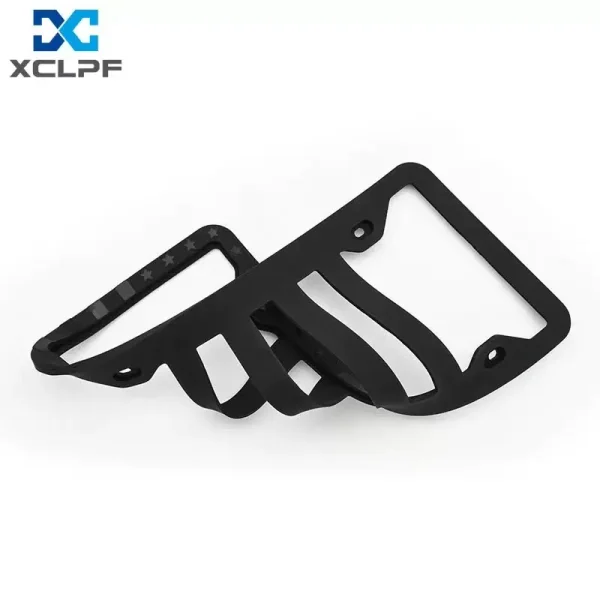
Choosing a flexible, wrap-around design completely bypasses the need for extra spacer hardware or protective tapes. By prioritizing premium materials that naturally absorb road shock, reduce physical depth, and conform seamlessly to the contours of your vehicle's bumper, you can secure your registration plate quickly while enjoying long-term peace of mind on the road.
Don't let a minor accessory ruin your high-end factory paint. Explore our elite range of low-profile license plate solutions tailored to your specific style. From premium real carbon fiber and classic heavy-duty stainless steel to sleek slimline aluminum, we offer an extensive selection of high-quality materials to upgrade your ride. Looking for a 100% tool-free, scratch-proof solution? Check out our ultra-flexible Zero-Rattle Silicone Series which wraps snugly around your plate to act as a soft, built-in barrier between metal and your vehicle's clear coat.