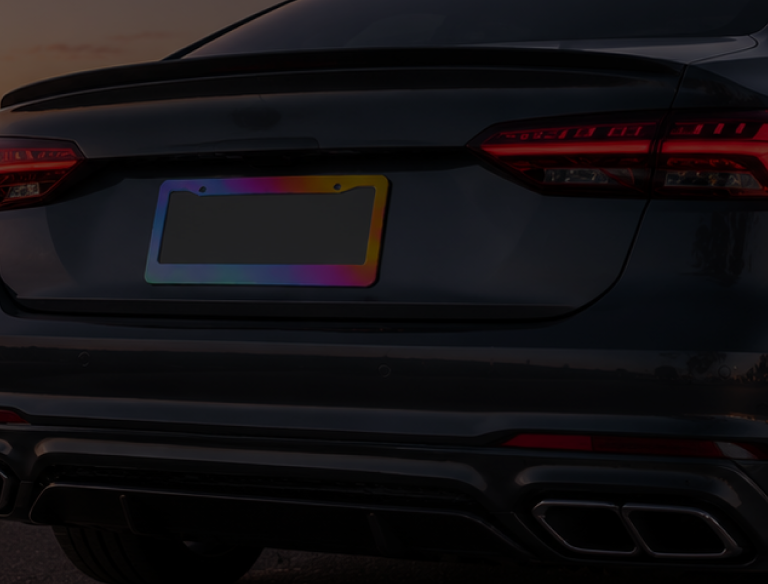
When you invest in custom license plate frames for your automotive dealership, car club, or private brand, one crucial question dominates the design process: How long will the logo actually look good?
The rear and front bumpers of a vehicle are hostile environments. Every mile driven exposes your custom branding to a barrage of highway debris, harsh weather, UV radiation, and automated car wash brushes. If the branding wears off within a year, your investment loses its promotional value.
To apply a custom logo or business name to a license plate frame, manufacturers primarily rely on two major industrial methods: screen printing and laser etching. Both options create highly professional results, but they use fundamentally different engineering principles.
Understanding how these two processes interact with the elements over time will help you choose the option that offers the best longevity for your specific fleet or vehicle.
What is Screen Printing? The Time-Tested Ink Layer
Screen printing is a traditional customization method that has been used in the automotive industry for decades. The process involves creating a stencil of your logo on a fine mesh screen. A squeegee is then used to push thick, high-opacity automotive ink through the open areas of the stencil directly onto the surface of the license plate frame.
This method is highly popular for several clear reasons:
- Rich Color Vibrancy: It allows for highly saturated, opaque colors that stand out dramatically against dark background frames.
- Precise Color Matching: It supports exact Pantone color alignment, making it ideal for established corporate brands that require specific color tones.
- Excellent Contrast: Printing bright white or neon lettering on a matte black frame creates an immediate visual impact from a distance.
- However, the defining characteristic of screen printing is that the ink sits as a separate, external layer on top of the frame material. While modern automotive inks are formulated to bond tightly with plastics and metals, the design remains a surface-level addition.
What is Laser Etching? The Permanent Structural Modification
Laser etching takes a completely opposite approach to customization. Instead of adding a layer of colored material to the frame, laser etching uses a computer-guided, high-energy laser beam to alter the existing surface of the frame material.
As the laser passes over the license plate frame, it generates intense, localized heat. This heat vaporizes or burns away a microscopic layer of the substrate material, permanently engraving the logo or text into the frame itself.
This modern technology introduces a different set of visual advantages:
- Microscopic Precision: The laser can replicate extremely intricate vector patterns, delicate lines, and complex typography with absolute clarity.
- Integrated Aesthetics: On anodized aluminum or coated stainless steel frames, the laser reveals the raw, silver metallic contrast beneath the coating, creating a highly sophisticated appearance.
- Textured Indentation: The process leaves behind a clean, slightly recessed mark that is physically part of the product.
- Because laser etching removes material rather than adding it, there is no paint or ink involved in the final marking.
Longevity Comparison Matrix
To help evaluate how these two processes handle different real-world stress factors on the open road, it helps to examine their technical behaviors side-by-side.
| Performance Metric | Screen Printing Process | Laser Etching Process |
|---|---|---|
| Marking Type | External additive ink layer | Structural removal of material |
| UV Sun Resistance | Pigments can shift or dull over years | Highly stable; cannot be faded by sunlight |
| Physical Wear Behavior | Exposed to chipping from road sand | Immune to peeling; flush or slightly recessed |
| Chemical Resistance | Vulnerable to prolonged exposure to road salts | Highly resilient against solvents and detergents |
| Color Variety | Multi-color and full-color capable | Limited to the color of the underlying substrate |
| Best Substrate Fit | ABS Plastic, Matte Polycarbonates | Anodized Aluminum, Stainless Steel |
The Longevity Showdown: Road Conditions Tested
When analyzing which process lasts longer, the clear engineering winner for pure durability is laser etching. Because a laser-etched design is physically carved into the frame material, it eliminates the common failure points associated with traditional paints.
Handling Solar Radiation and UV Exposure
When vehicles spend years parked outdoors, solar radiation slowly attacks the chemical bonds of standard printing inks. Over time, this causes the pigments to break down, a process known as chalking or fading.
Laser etching does not suffer from solar breakdown. Because there are no ink pigments to fade, a laser-etched logo maintains its original contrast and crispness for the entire lifespan of the frame, regardless of how many hours it spends under direct sunlight.
Resisting Mechanical Abuse and Wash Cycles
Every time a vehicle goes through an automated commercial car wash, the spinning abrasive brushes apply significant physical friction to the license plate frame. Additionally, driving at highway speeds forces tiny sand particles and road gravel to pelt the front and rear bumpers.
- Screen Printed Frames: The raised edges of screen-printed ink layers can eventually act as catches for physical friction. Over thousands of miles, small rock chips can create tiny fractures in the paint, eventually leading to flaking or delamination.
- Laser Etched Frames: Because the laser-etched logo sits slightly below or perfectly flush with the frame surface, there are no raised edges to catch. Hard brushes and flying debris cannot peel or scrape the design away because there is nothing to detach.
Confronting Chemical Hazards and Winter Road Salt
In regions that experience severe winters, highway departments spray roads with liquid chemical de-icers and heavy rock salt. These compounds are highly corrosive and can gradually eat away at the binders used in screen printing inks, causing the graphics to look dull and worn.
Laser-etched markings on high-quality metals, such as marine-grade stainless steel or powder-coated aluminum, are highly chemically inert. Road salts and aggressive, highly alkaline wash detergents cannot degrade the marking because it is a permanent structural change in the metal itself.
Finding the Right Process for Your Production Goals
While laser etching holds the crown for ultimate physical durability, screen printing remains an excellent option for specific project requirements. If your company branding relies heavily on multi-color layouts, bright corporate identities, or complex logos that require vibrant color fills on affordable ABS plastic frames, screen printing delivers a visual impact that laser etching cannot achieve.
On the other hand, if your priority is long-term, maintenance-free durability for premium vehicle fleets, luxury car dealerships, or high-end retail accessories, laser etching provides an unmatched service life. A laser-etched metal frame will gracefully endure years of environmental punishment while keeping your company logo looking clean, sharp, and premium.
Selecting the right manufacturing path requires balancing your aesthetic goals with the practical environment your vehicles will face. By matching the correct customization process to your frame material, you can ensure your brand stays visible for the long haul.