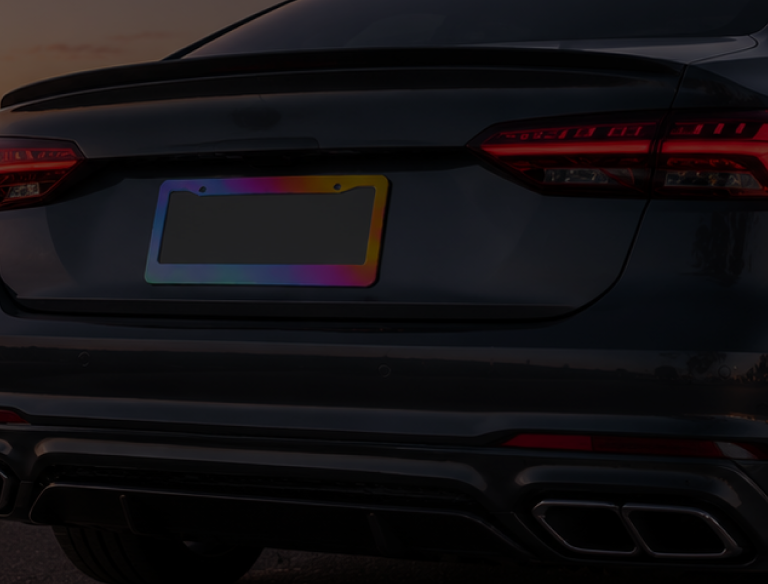
When customizing or maintaining an automobile, most drivers dedicate their energy to what lies underneath the hood or the striking design of aftermarket wheels. It is exceptionally easy to overlook the smaller details, such as mud guards, wind deflectors, and license plate brackets. However, these exterior components are subjected to a continuous barrage of real-world environmental stressors every single kilometer you drive. Walk through any local parking lot, and you will inevitably notice vehicles with faded trim, cracked plastic guards, or license plate frames that have turned a dry, chalky gray. These visual defects are rarely the result of a driver’s neglect; instead, they are the direct consequence of poor material selection during the manufacturing process. In the world of automotive exterior accessories, the line between brittle and durable is determined entirely by the polymer compound chosen to face the elements.
To navigate the automotive accessory market effectively, a car owner must realize that "plastic" is a broad term covering vastly different chemical compounds, ranging from fragile, low-grade recycled waste to high-performance polymers engineered for endurance. When a driver installs an exterior accessory, they are introducing that component to intense wind resistance, sudden gravel impacts, and violent chemical exposure from car washes. Choosing an accessory without understanding its material base often results in entering a rapid countdown toward failure, where a minor touch from another vehicle while parallel parking or a trip through a high-pressure wash loop is enough to snap the component entirely.
The Root of Brittleness: The Hidden Trap of Low-Grade Polymers
The marketplace is flooded with ultra-cheap online listings and bargain-store automotive hardware. To minimize production costs and maintain low pricing, these low-tier accessories rely heavily on low-density Polyvinyl Chloride (PVC) formulations or unspecified, generic recycled plastic mixes. While recycling is universally beneficial for short-lifecycle consumer goods like packaging or water bottles, it introduces catastrophic vulnerabilities when applied to high-exposure automotive components. Recycled plastic pellets naturally contain microscopic impurities from mixed polymer sources. Under continuous structural stress, these impurities act as internal weak points, causing the material to crack under minor physical tension.
Furthermore, once a plastic polymer has been remelted down, remolded, and subjected to environmental degradation multiple times, its long-chain molecular bonds are permanently broken. The material loses its structural elasticity, turning into a brittle shell that cannot absorb vehicle vibrations. This brittleness is amplified heavily during severe seasonal temperature swings. In freezing winter conditions, these low-grade recycled polymers turn exceptionally fragile, shattering at the slightest touch. Conversely, during peak summer heat waves, they lose their structural rigidity, causing brackets and frames to sag, warp, and pull away from the vehicle's original paneling.
The Foundation of Durability: Engineering-Grade Automotive Plastics
To achieve true durability, a vehicle accessory must be manufactured from virgin, engineering-grade polymers. Major global car manufacturers do not use cheap recycled plastics for exterior trim pieces; instead, they rely on specialized compounds like ABS, PP, and PC. These materials represent the durable side of the automotive spectrum, each selected as a premium, virgin formulation to fulfill specific structural and protection roles without falling into the trap of brittleness.
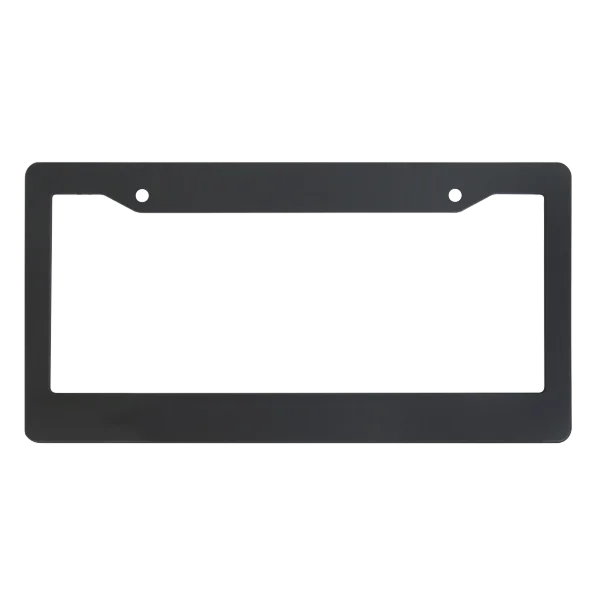
For components requiring precision-locking structures and rigid geometric centering, high-density Acrylonitrile Butadiene Styrene (ABS) serves as the industry standard. The chemical matrix of virgin ABS provides a perfect balance of surface hardness and structural flex strength, making it the ideal material for intricate click-in channels like our Snap In Euro License Plate Frame or multi-hole mounting matrices like our GCC Short License Plate Frame. ABS handles uneven screw tension easily without cracking, and its dimensional stability ensures it remains perfectly flush against the bumper through freezing blizzards and blistering desert heat waves.
When the application demands extreme impact elasticity rather than rigid structural framing, Polypropylene (PP) takes center stage as the king of flexibility. Virgin PP possesses remarkable fatigue resistance, allowing it to deform under immense physical stress and instantly snap back to its original shape without cracking or displaying white stress marks. This makes premium PP accessories the ultimate durable choice for off-road environments, wide-body fender accents, and mud guards that must withstand continuous stone chipping and heavy gravel impact without shattering.
For clear protective guards, high-gloss accents, or clear shielding elements, Polycarbonate (PC) delivers glass-like optical clarity combined with heavy-duty shatterproof performance. Premium PC structures feature high surface hardness, making them exceptionally resistant to micro-scratches from automated car wash brushes or airborne highway dust. Because PC maintains its crisp, linear properties under load, it provides a high-end luxury aesthetic that complements clean car paintwork while offering reliable surface shielding.
Protecting the Investment in Your Vehicle
Ultimately, choosing between a brittle recycled plastic accessory and a durable engineering-grade polymer comes down to understanding value versus upfront cost. Saving a few dollars on an unbranded, brittle bracket frequently results in additional expenses later on—whether through having to replace the broken hardware multiple times, dealing with annoying body rattles at highway speeds, or repairing fine paint scratches caused by a loose, vibrating frame.
Investing in hardware crafted from virgin ABS, flexible PP, or high-gloss PC ensures your exterior accents remain structurally secure, functional, and visually clean across all driving seasons. It is an investment in long-term peace of mind, ensuring your modifications can handle the everyday realities of modern driving while perfectly complementing your vehicle's original design language.