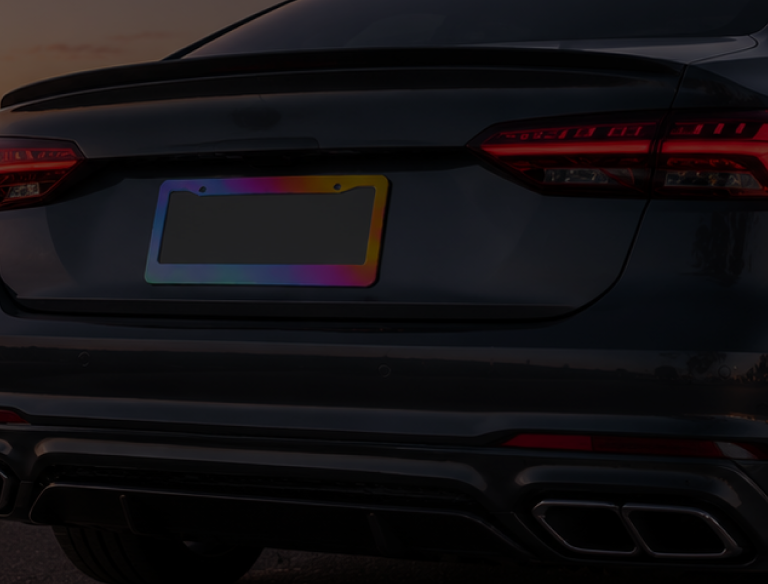
For decades, the global automotive accessory market presented vehicle owners with a rigid dilemma. Drivers had to choose either between hard metal frames that inevitably clank against the trunk sheet metal or low-grade rigid plastic holders that easily fracture under freezing winter temperatures or highway vibrations. Today, a major industrial manufacturing revolution is quietly redefining exterior automotive trim: Monolithic Flexible Silicone Engineering. Moving completely away from stiff, brittle materials that fight against environmental stresses, this advanced technology introduces a fully resilient, soft-cushioning architecture that fundamentally changes how license plates are protected, isolated, and mounted to a vehicle body.
At the absolute core of this manufacturing engineering is the strategic transition from multi-part segmented assembly lines to Monolithic High-Temperature Compression Molding. By converting high-molecular-weight raw elastomeric macromolecule chains into a completely unified, non-rigid automotive component, this specialized industrial processing method shapes the entire outer perimeter, the deep protective backing cushion, and the precise mounting screw hubs simultaneously in a single, continuous closed-mold cycle. This process completely eliminates weak adhesive points, mechanical joint seams, and structural layout vulnerabilities that typically fail over time. The resulting product is a flawless, high-performance protective component that highlights how advanced thermodynamic engineering can elevate both the aesthetic luxury and the actual working lifespan of exterior automotive hardware.
Process Guide: High-Temperature Vulcanization and Hydraulic Tooling
To transform raw, unvulcanized silicone gum into a structurally sound, highly responsive automotive hardware component, the factory line relies on heavy industrial machinery and advanced thermodynamic control. The raw elastomeric mass must pass through an intensive heating and packing sequence within custom-engineered, multi-cavity master molds machined from premium, wear-resistant tool steels. Raw high-consistency silicone compound is incredibly sensitive to even slight pressure and temperature variations, meaning our production engineers must manage both chemical cross-linking and physical material flow with absolute precision.
- Thermal Cross-Linking and Temperature Chain Control: Under a strictly monitored curing profile—with master tool temperatures regulated precisely between 165°C and 185°C (330°F to 365°F)—intense thermal energy is transferred uniformly across the steel cavity. This high heat triggers a rapid, irreversible vulcanization reaction. The individual, unlinked polymer chains quickly form covalent siloxane (Si-O-Si) bonds, shifting the raw compound from an unstable plastic mass into a highly stable, cross-linked thermoset matrix. This atomic realignment ensures that the finished automotive frame can be stretched, twisted, compressed, or heavily distorted over millions of cycles without experiencing stress whitening, internal micro-tearing, structural sagging, or loss of its original structural memory.
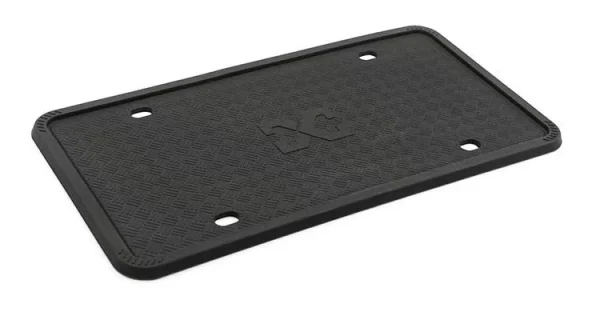
- Micron-Level Tolerance Sealing and Fluid Dynamics: Liquid or heated silicone compound under pressure behaves like a highly pressurized fluid. If the mold halves do not seal with absolute perfection, the material will seep outward along the parting lines, creating a messy, sharp plastic excess known in manufacturing as "flash." To prevent this, the mating faces of our custom steel tooling are machined down to micron-level tolerances (±0.01mm). During the active molding cycle, heavy industrial hydraulic cylinders apply hundreds of tons of continuous clamping force to lock the cavities shut. This immense pressure forces the silicone to distribute uniformly into the complex internal grooves and debossed branding zones of the tool, ensuring a 100% solid, uniform, and void-free cross-section with perfectly smooth, smooth-to-the-touch rounded borders.
- Stress-Free Uniform Cooling Passages: One of the greatest engineering challenges in high-temperature rubber molding is managing post-mold shrinkage and structural warping. If one side of a freshly molded frame cools down faster than the other, severe internal mechanical stresses become locked inside the rubber, causing the piece to twist or bow when it exits the machine. To master this delicate phase, our manufacturing lines integrate automated, progressive cooling water circuits directly inside the steel mold base. These computerized water loops absorb thermal energy evenly from the cross-linked frame before the tool separates. By dropping the demolding temperature perfectly across the entire tool face, the silicone settles into its final, engineered dimensions without any internal structural distortion, allowing the frame to maintain an absolute, flush-fitting flatness that rests perfectly parallel to the vehicle body.
Why It Matters: Precision Benefits of Flawless Molding
Vehicle paintwork is highly vulnerable to micro-abrasions and friction damage caused by the continuous, high-frequency vibrations of everyday driving. When a standard rigid metal or stiff plastic frame is bolted tightly onto a bumper, the constant wind resistance and engine idling turn the backside of that frame into a microscopic sander. Over time, it slowly grinds away the vehicle's decorative clear coat, tearing into the base paint and exposing the raw sheet metal underneath to catastrophic rust and corrosion. This fully flexible, custom-molded architecture changes that destructive dynamic entirely by introducing a permanent Paint-Safe and Rattle-Proof Mechanism.
Because the entire framework is formed from a continuous, soft-cushioning silicone polymer matrix, it functions as an integrated shock absorber that continuously dampens the kinetic forces between the heavy license plate and the vehicle’s painted bumper. It absorbs, diffuses, and deadens acoustic waves, offering an impressive, laboratory-verified Zero-Noise Performance even when traveling over aggressive gravel roads or when subjected to the deep baselines of high-end aftermarket vehicle sound systems.
Furthermore, the soft, custom-molded interior channels wrap completely and securely around the entire perimeter of the license plate. This critical feature locks the sharp, raw cut edges of the official metal plate inside a rubberized protective sleeve, ensuring those metal edges can never rub against the car body or injure an owner during car washing. When unexpected low-speed rear-end impacts, parking mishaps, or automated car wash brushes put pressure on the bumper, the high elastic threshold of the rubber deflects the force and buffers the crush impact, keeping the internal license plate perfectly flat and entirely free from permanent physical warping or bending.
Quality Assurance: The Geometrical and Material Compliance Audit
Before any batch of monolithic flexible silicone frames is cleared to leave the manufacturing floor for surface post-cleaning, retail packaging, and global distribution, random production samples must survive a strict, multi-stage quality inspection protocol within our engineering laboratory to ensure a true zero-defect standard:
- 3D Profile Laser Scanner Verification: The finished rubber components are mounted into calibrated holding fixtures and analyzed under fully automated 3D laser profiling inspection systems. This non-contact scanning system measures the exact depth of the internal plate-retaining channels and checks the concentricity of the mounting bolt holes down to fractions of a millimeter. Every single measurement must comply 100% with standardized global license plate dimensions to guarantee an absolute, hassle-free, and tool-friendly fit for the consumer.
- Durometer Hardness Testing: To verify that the high-temperature vulcanization stage was completely successful, inspectors utilize specialized digital Shore A Durometers to test the material hardness across multiple points on the frame. The material must rest strictly within the optimal automotive hardness range—providing enough structural rigidity to hold its shape against heavy wind drag, while retaining the perfect elastomeric soft property needed to absorb road vibrations and protect vehicle paintwork.
At our manufacturing core, we firmly believe that true automotive luxury and long-lasting exterior hardware are born from rigorous process controls and uncompromised engineering. By merging advanced high-temperature compression molding technology, micron-level tool steel molds, and fully automated thermal cross-linking sequences, we completely eliminate the structural vulnerabilities, rattling noises, and corrosion risks that plague traditional exterior vehicle hardware. This monolithic manufacturing technique guarantees a finished product that delivers beautiful visual lines, permanent structural memory, and complete peace of mind on the open road, reflecting our brand's unyielding commitment to precision automotive engineering.