There is nothing quite like the feeling of hitting the open road with a premium, upgraded car audio system. Whether you have just installed a single active enclosure or a massive, custom-built dual 12-inch subwoofer setup pushing thousands of watts of raw RMS power, feeling that deep, clean low-end bass physical response is highly addictive.
However, for millions of car audio enthusiasts, that perfect acoustic experience is instantly ruined the second the bass drops. Instead of hearing crisp, undistorted low frequencies, you are treated to an incredibly annoying, high-pitched, metallic buzzing and vibrating noise coming directly from the rear of your car.
That structural buzzing is the infamous license plate rattle. When heavy subwoofers move, they displace massive amounts of air and send intense kinetic energy rippling through your vehicle's trunk lid, tailgate, and rear bumper. Because a standard factory registration plate is essentially a thin sheet of loose aluminum held down by just two top screws, it acts like a metallic reed, violently slapping against your vehicle’s factory paint clear coat with every single bass note. To anyone standing outside your vehicle, that cheap buzzing sound completely ruins the premium impression of your car and masks the thousands of dollars you spent on audio gear. In this comprehensive acoustic damping guide, we will analyze why subwoofers trigger this rattle and outline the definitive methods to stop it for good.
The Physics of Bass Rattle: Why Is It So Intense?
To permanently eliminate this acoustic nuisance, you must first understand why lower sound frequencies cause so much physical vibration compared to mid-tones or vocals. Subwoofers reproduce low-frequency sound waves, typically ranging from 20Hz to 80Hz. These waves are physically massive and carry immense kinetic energy.
When your subwoofer’s cone strokes back and forth, it compresses the air inside the cabin, creating dramatic cabin pressure changes. This pressure wave travels directly through the vehicle body, transferring energy into flexible panels like the trunk steel.
Because standard factory metal or rigid plastic license plate brackets do not feature any insulating rear geometry or shock absorption padding, they are caught in the crossfire. The plate assembly enters a state of mechanical resonance, bouncing away from the vehicle body and slamming back down hundreds of times per minute. This metal-on-metal or metal-on-paint friction doesn't just create a horrible sound; it aggressively scores and chips your factory clear coat, inviting moisture entrapment and rust formation right around your factory mounting holes.
The Essential Sound-Deadening Toolkit
Before attempting to tune your trunk's acoustics, grab a few basic materials to help absorb and damp the heavy mechanical vibrations:
- Butyl-Based Sound Dampening Material: Premium adhesive sheets (such as Dynamat, Sound工具, or Noico) designed to add dense weight to vibrating sheet metal.
- A Standard Screwdriver or Socket Wrench: To completely detach the existing plate and bracket assembly.
- Isopropyl Alcohol and a Microfiber Towel: Crucial for deep-cleaning the panel surface before applying any dampening materials.
- A Precision Hand Roller: To properly press and activate the adhesive backing on sound-deadening mats.
Step-by-Step Guide to Stop License Plate Buzzing
Follow these field-tested methods to insulate your vehicle's bodywork and achieve a perfectly silent exterior.
Step 1: Deep Clean and Isolate the Metal Panel
Begin by completely removing your current frame and license plate. Spray the entire recessed license plate pocket with rubbing alcohol and wipe it clean with a microfiber cloth to remove all road grit, wax buildup, and residual debris. Once dry, cut a small rectangular piece of butyl-based sound-deadening material slightly smaller than the physical size of your registration plate. Peel the adhesive backing, press it directly onto the bare car steel behind where the plate sits, and use your hand roller to flatten it completely. This simple trick dampens the structural vibrations of the trunk lid itself.
Step 2: Add Dense Mechanical Isolation to the Rear Corners
If you are planning to run a traditional metal or rigid carbon fiber frame, you must prevent the hard backing of the assembly from making raw contact with your fresh sound-deadening mat or surrounding paint. You can achieve this by applying thick, weather-resistant foam rubber pads or neoprene spacers directly to the four rear corners of the plate assembly. When you bolt the plate down, these soft pads will compress slightly, maintaining constant outward tension that actively stops the plate from bouncing against the trunk during heavy bass drops.
Step 3: Utilize a Four-Bolt Mounting Layout
If your vehicle’s rear bumper or tailgate is equipped with four factory threaded inserts, never make the mistake of only utilizing the top two screws. Leaving the bottom half of the plate unsupported guarantees that heavy subwoofer bass waves will lift and flap the bottom edge. Always secure all four corners using correct-length screws paired with soft nylon or rubber washers to cushion the hardware connection.
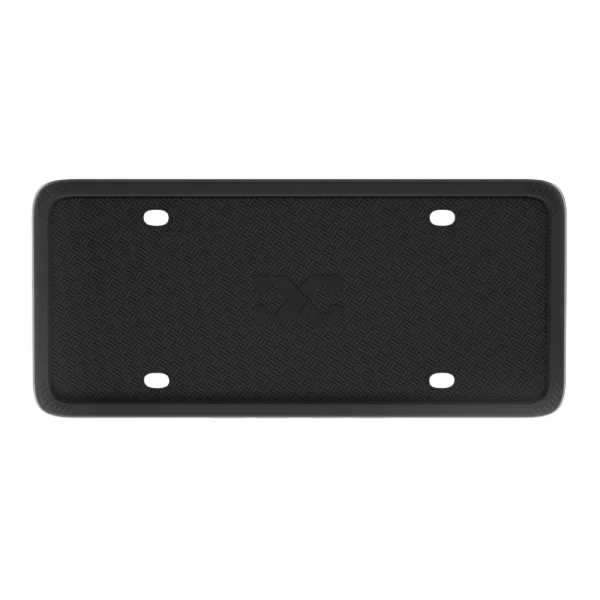
The Ultimate Fix: Switch to a Flexible Silicone Frame
While applying layered foam tapes and heavy butyl mats works well, these materials can break down over time due to weather exposure, car wash pressure, and extreme winter temperatures. If you want a clean, permanent solution that requires zero ugly tapes or complex mechanical padding, the smartest move is upgrading to a premium silicone license plate frame.
Silicone frames are highly favored within the car audio community because they function exactly like a protective, shock-absorbing phone case for your license plate. By fully wrapping around the sharp, galvanized metal edges of the registration plate, a medical-grade silicone frame acts as an all-in-one acoustic insulator.
Silicone provides unique acoustic advantages for heavy bass vehicles:
- Built-In Energy Absorption: The soft, dense, elastomeric structure of silicone natively absorbs kinetic shockwaves from subwoofers, neutralizing plate resonance before it can turn into noise.
- Total Paint Defense: Because it creates a soft barrier over 100% of the plate's rear perimeter, it ensures that your car's clear coat never experiences metal friction damage.
- Integrated Drainage Design: High-quality silicone frames feature bottom drainage slots that automatically flush away trapped wash water and road spray, preventing rust while keeping your hardware perfectly dry.
The "Zero-Rattle" Tuning Checklist
Before cranking up your audio system, run through this quick engineering checklist to guarantee 100% rattle-free performance:
- Ensure a soft cushion layer fully insulates the back of the metal plate.
- Secure the assembly firmly, using all four mounting holes if available.
- Place soft nylon or rubber washers directly beneath all mounting screw heads.
- Check that the license plate does not interfere with rear proximity sensors.
- By taking the time to understand how low-frequency energy interacts with your vehicle's exterior panels and prioritizing vibration-dampening materials, you can cleanly showcase your audio system's true power without a single distracting buzz.
In the world of car audio, true premium sound relies heavily on controlling mechanical vibrations. Eliminating loose-fitting brackets from the tailgate is a small detail that makes a massive difference in how a vehicle presents itself. Shifting to heavy-duty carbon fiber or low-profile aluminum options provides the structural rigidity required to resist heavy road wind, while utilizing vibration-damping frames made of automotive-grade silicone ensures that the deep, low frequencies remain perfectly crisp and undistorted without any distracting exterior buzz.