In the competitive landscape of automotive dealership branding and exterior customization, capturing attention on the open road requires striking visual contrast. When vehicle brands, car clubs, and premium dealerships design their custom license plate frames, they face a common challenge: standard ink-printed logos often lack the true mirror-like reflection found on a vehicle’s factory chrome trim, making the accessories look dull or cheap. While liquid inks have their place, the hot stamping process—also known as hot foil stamping or thermal transfer—stands as the definitive manufacturing craft for injecting pure metallic brilliance and mirror-grade reflection onto license plate frames.
The core philosophy of hot stamping revolves around a sophisticated thermal transfer mechanism. Instead of spraying or printing liquid colors, this advanced technique uses intense mechanical pressure and calibrated heat to permanently bond an ultra-thin, genuine metallic foil layer onto the raised logos and borders of the frame. To ensure the highest level of structural bonding and manufacturing accuracy, this premium hot foil transfer process is engineered exclusively for rigid engineering plastics and polymers, such as ABS, PC, PP, and PS. In this edition of our craftsmanship encyclopedia, we will dive into the technical science behind how hot stamping works, explore the premium metallic spectrum we offer, and analyze why this craft offers massive commercial advantages for your branding needs.
How Hot Stamping Works
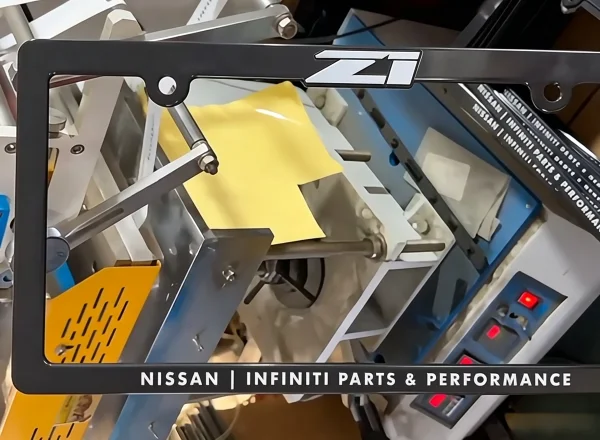
Unlike traditional liquid ink applications that rely on slow chemical drying or evaporation, hot stamping is a clean, instant, and highly precise mechanical sublimation process. Achieving flawless foil deposition with razor-sharp margins onto high-impact plastic license plate frames requires four highly synchronized engineering stages:
- Step 1: Custom Metal Die Engraving (The Matrix)Every design begins in our CNC tooling department, where your corporate typography or brand artwork is precision-etched onto heavy-duty copper or steel blocks to create custom metal dies. Metal is chosen for its superior thermal conductivity and mechanical strength. The resulting die features crisp, vertical geometric walls that match your logo design with microscopic accuracy.
- Step 2: Placing the Multi-Layer Foil MembraneDuring production, a specialized multi-layer foil ribbon is fed between the heated metal die and the molded plastic frame. This high-tech foil membrane consists of several crucial layers stacked together: a polyester carrier film, a heat-sensitive release layer, a highly reflective metallic color layer (Gold, Silver, or Holographic), and a specialized thermal adhesive backing.
- Step 3: Calibrated Heat-and-Pressure DwellThe hot stamping machine heats the engraved metal die to a strictly regulated, intense temperature threshold. The heavy press then drives the heated die downward onto the plastic license plate frame under immense pneumatic pressure. The die clamps down for a strictly calibrated fraction of a second—a critical window known as the "dwell time."
- Step 4: Molecular Fusion & Precision ReleaseUnder the simultaneous application of intense heat and mechanical compression, the thermal adhesive layer on the back of the foil instantly melts, creating a powerful molecular weld that permanently fuses the metallic pigment layer onto the raised plastic LOGO surface. As the press retracts, the carrier film is cleanly stripped away, leaving behind a perfectly flat, brilliantly reflective metallic signature with zero running, smudging, or raw edges.
Plastic Substrate Mastery: Seamless Molecular Bonding
A major key to our hot-stamping excellence is our dedicated mastery over rigid engineering polymers. Understanding the thermal thresholds of different plastic types is what separates a world-class factory from a standard print shop:
- Rigid Plastic Anchoring (ABS, PC, PP, & PS): These high-impact engineering plastics are universally loved in the automotive sector for their lightweight durability and strength. More importantly, they provide the ideal thermal threshold for hot foil stamping. During the compression phase, the plastic surface experiences a micro-fraction of surface softening. This allows the foil’s thermal adhesive to sink directly into the polymer matrix, creating an indestructible bond that prevents the foil from ever lifting.
- Edge Crispness Preservation: Cheap manufacturing lines often apply too much heat, causing the molded plastic characters of the frame to warp or melt around the edges. Our advanced machinery features micro-processor temperature controllers that deliver the exact thermal energy required to melt the foil backing without affecting the underlying structural shape of the plastic characters.
- The Commercial Advantage: By mastering this precision transfer, we allow dealerships and brands to turn cost-effective, lightweight plastic frames into ultra-premium accessories that look and feel like heavy, real metal hardware, giving you premium luxury without the premium shipping weight.
Foil Material Excellence: The Premium Visual Spectrum
To give brands and designers full creative freedom over their fleet styling, our hot stamping line offers three highly distinct, automotive-grade foil lineups, each delivering a massive visual punch:
- Sleek Metallic Silver (The Chrome Alternative): This is the undisputed favorite for commercial car dealerships and official vehicle distribution groups. It delivers a pure, flawless mirror reflection that mirrors the car's original chrome body panels, factory emblems, and grill work, resulting in a cohesive and highly sophisticated aesthetic.
- Classic Metallic Gold: For brands looking to make a bold statement of high prestige, our classic metallic gold foil adds a rich, upscale touch of luxury. It is highly popular in premium vehicle scenes, collector clubs, and high-end automotive retail markets.
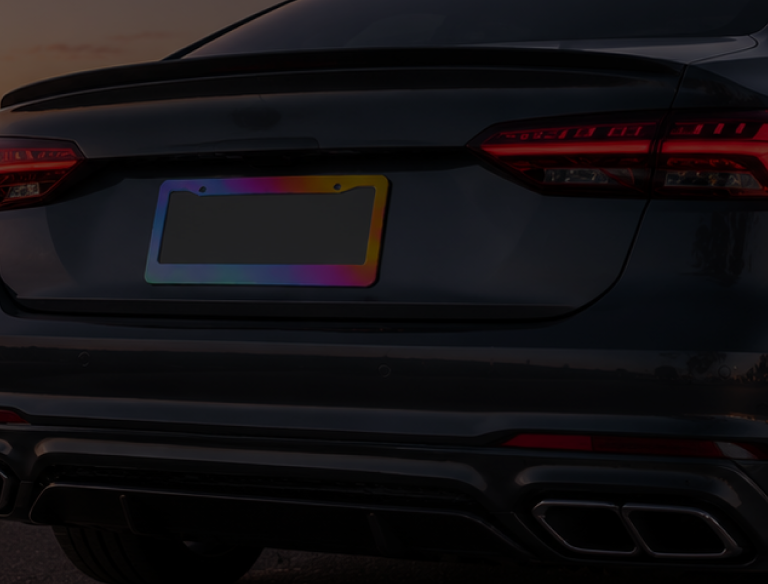
- Holographic Rainbow / Laser Foil: The ultimate choice for modern car enthusiasts and cutting-edge lifestyle brands. This foil uses micro-prismatic structures within its transparent layers to refract natural sunlight. As the vehicle moves down the highway, the logo actively shifts through a striking, multicolored rainbow gradient, ensuring maximum visibility and massive head-turning appeal.
Why Choose Hot Stamping over Traditional Liquid Printing?
Choosing hot stamping for your plastic license plate frames unlocks a distinct set of performance and aesthetic characteristics that make it a premier choice for high-end vehicle accessories:
- True Metallic Mirror Gloss: The defining feature of hot stamping is its ability to deliver a genuine, continuous mirror-like reflection. Because the process transfers a solid, flat vacuum-metallized aluminum foil sheet rather than a liquid coating, the resulting finish achieves a high-opacity, brilliant metallic sheen that perfectly matches a vehicle’s factory-installed exterior chrome trim and accents.
- Excellent Road Endurance & Anti-Peeling: Because the foil layer is thermally welded into the rigid plastic surface under precise temperature regulation, it becomes structurally integrated with the underlying polymer matrix. This thermal fusion method provides excellent protection against solar UV radiation and environmental exposure, allowing the high-gloss characters to maintain their original reflective brilliance over high mileages.
- Razor-Sharp Border Definition: Hot stamping relies on flat mechanical compression under heavy pneumatic pressure. The custom-etched metal die cuts the foil ribbon cleanly against the exact geometric borders of the molded plastic text. This physical stamp guarantees flawless, crisp legibility with absolutely zero bleeding, ensuring that ultra-thin branding details, telephone numbers, and corporate web addresses remain perfectly clean and readable.
Maintenance Tips
Choosing a professionally hot-stamped polymer license plate frame represents the absolute peak of large-scale cost efficiency and high-end visual impact. By utilizing a technique that fuses real metallic foils directly into ABS, PC, or PP plastics via precision thermal engineering, you ensure your dealership or brand signature remains vibrant, sharp, and brilliantly reflective for the long haul.
To ensure the high-gloss mirror finish of your hot-stamped logos remains in showroom condition for decades, follow these quick, expert steps:
- Gently Lift Away Road Mud: When washing your vehicle, use a soft automotive microfiber wash mitt or plush sponge to gently clean over the raised hot-stamped logos, allowing soap lubrication to carry away grit safely.
- Avoid Close-Range High-Pressure Blasting: When using high-powered commercial car wash pressure wands, avoid holding the nozzle closer than 12 inches (30 cm) directly at the edges of the hot-stamped letters to protect the integrity of the thermal weld.
- Use pH-Neutral Shampoos: Wash the frame using standard pH-balanced automotive soaps. Never apply highly aggressive paint thinners, raw industrial solvents, or high-acid engine bay degreasers directly onto the hot-stamped graphics to preserve the optical clarity of the metallic layer.